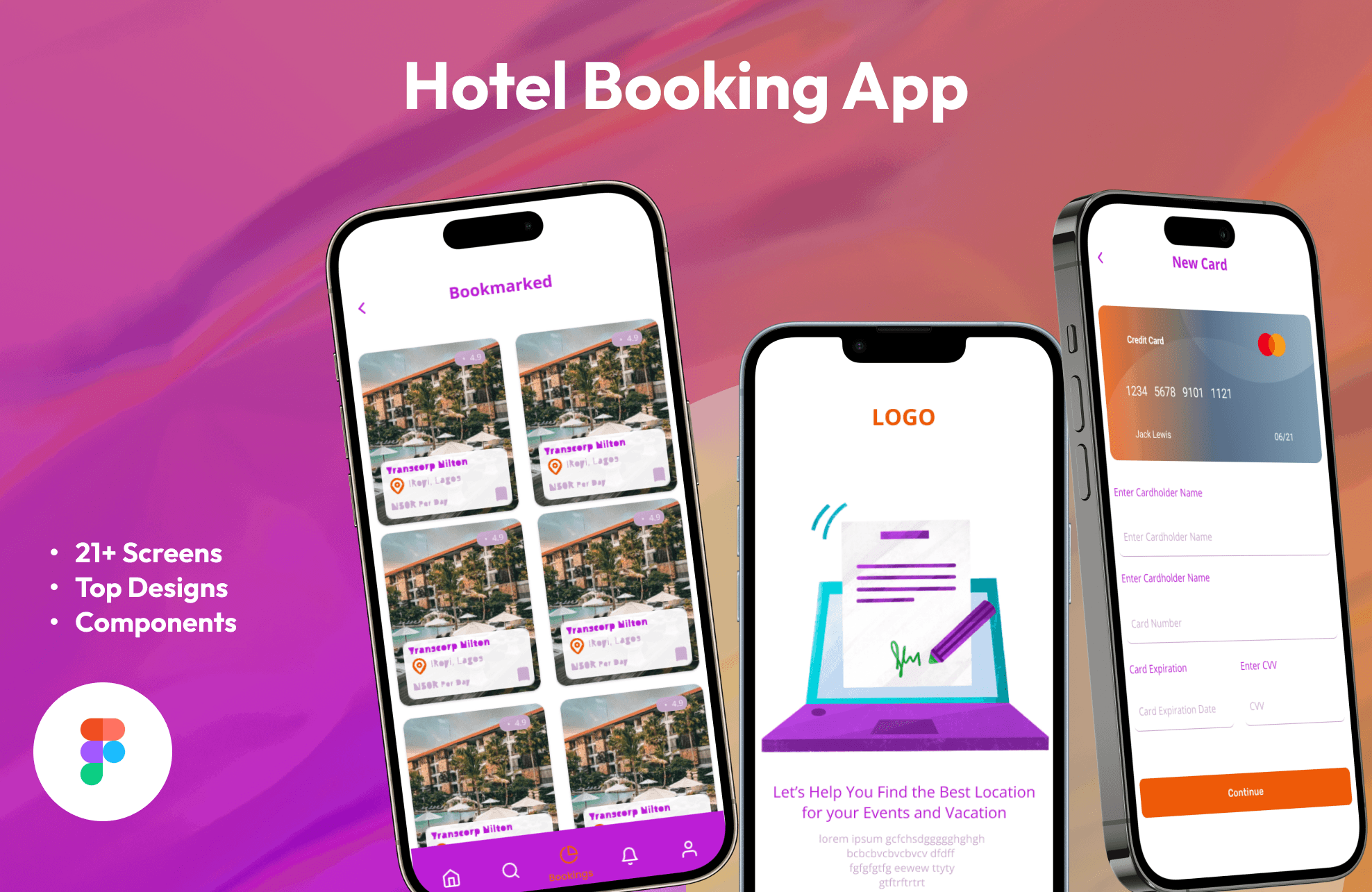
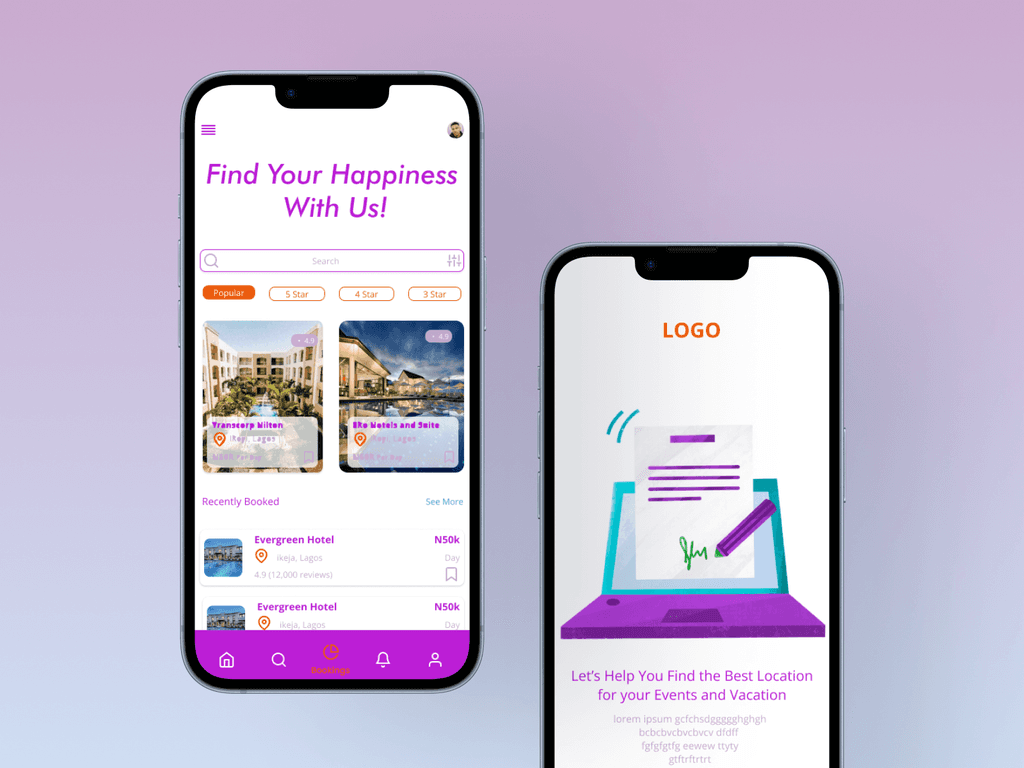
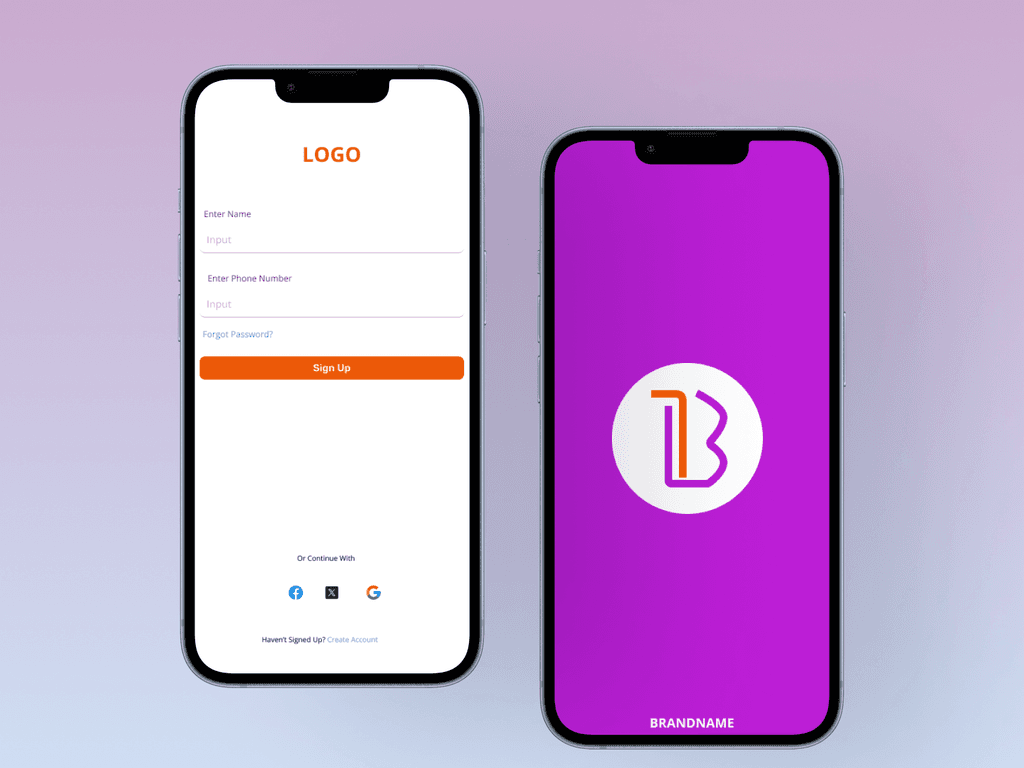
Overview
The mobile application, Bokh, was designed to address the common pain points travelers experience when searching for, evaluating, and booking hotels. The goal was to streamline the hotel booking process, reduce decision fatigue, and provide a seamless, stress-free experience for users, whether they are booking for business trips or leisure travel.
Objectives
Simplify the hotel search and discovery process.
Provide personalized hotel recommendations based on user preferences.
Improve trust and transparency in reviews and ratings.
Streamline the booking flow to reduce friction and decision fatigue.
Research Methodology
To understand user needs and pain points, we conducted a combination of qualitative and quantitative research methods:
Surveys: Over 500 travelers responded to a survey about their hotel booking habits, frustrations, and expectations.
User Interviews: 20 in-depth interviews with business and leisure travelers helped uncover deeper insights into their booking processes and pain points.
Competitive Analysis: We analyzed several top hotel booking apps, evaluating their strengths and weaknesses based on user reviews, app features, and design.
Usability Testing: After initial prototypes were developed, usability testing was conducted to validate design concepts and ensure ease of use.
Key Findings
Stressful Decision-Making: 72% of users reported feeling overwhelmed by the sheer number of options available when choosing a hotel.
Frustration with Filters: 63% of users expressed frustration with filter options that didn’t fully meet their preferences or were too complicated.
Trust Issues with Reviews: 58% of users felt uncertain about the accuracy and reliability of hotel reviews, often leading to hesitation in making a booking decision.
Booking Workflow Complexity: 65% of users indicated that the process of making a reservation was often too cumbersome, with too many steps involved.
Lack of Personalization: 70% of respondents wanted a more personalized recommendation engine based on their preferences, such as hotel types, amenities, or location.
Core Objectives:
PainPoints
Overwhelming Choices: With so many options available across multiple platforms, travelers often found it challenging to zero in on the best hotels suited to their needs, resulting in decision fatigue.
Unreliable Reviews: Users reported that online reviews were often conflicting, and they struggled to trust them, especially when some reviews appeared to be fake or exaggerated.
Complicated Search Filters: Most hotel booking apps had overly complex filter systems that didn’t always cater to the user’s needs, requiring multiple steps to find a relevant result.
Clunky Booking Process: The process to book a hotel was frequently long and cumbersome, with users having to enter the same information repeatedly and often encountering hidden fees or unclear terms.
Limited Personalization: Generic recommendations based on location alone didn't reflect the nuanced preferences of individual users, leaving them frustrated with irrelevant search results.

Tom
Marketing Executive
Tech Proficiency: Medium
Needs: Fun, experiential hotels with good amenities for relaxation. Strong preference for reviews from other travelers who share their interests (e.g., family-friendly, romantic escapes).
Pain Points: Too many choices; difficulty discerning quality from quantity, lack of personalization.
Goals: Find unique, fun hotels that align with their interests, avoiding generic, mass-market options.

John
Retired Teacher
Tech Proficiency: Low
Needs: Affordable options with transparent pricing, easy-to-understand filters, and clear information about amenities.
Pain Points: Difficulty navigating booking apps, unclear pricing, and hidden fees.
Goals: Find budget-friendly accommodations without surprise costs, with a smooth, guided booking process.

Sarah
Project Manager
Tech Proficiency: High
Needs: Quick, efficient booking process with reliable reviews. A focus on comfort, proximity to business centers, and essential amenities like Wi-Fi and meeting spaces.
Pain Points: Time constraints and the need for efficient, seamless booking; dislikes wasting time on irrelevant options.
Goals: Book a hotel in a matter of minutes, with options that align with business needs and comfort.

Emma
Teacher
Tech Proficiency: Medium
Needs: Fun, experiential hotels with good amenities for relaxation. Strong preference for reviews from other travelers who share their interests (e.g., family-friendly, romantic escapes).
Pain Points: Too many choices; difficulty discerning quality from quantity, lack of personalization.
Goals: Find unique, fun hotels that align with their interests, avoiding generic, mass-market options.
Solution Approach
1. Simplified Hotel Discovery with Smart Filters:
To address the overwhelming choices, we designed HotelEase with an intuitive filtering system that allowed users to easily refine their search. The system included:
Smart Filters: Based on the user’s profile and preferences (e.g., budget, travel type, location preferences, amenities), we recommended only the most relevant hotels.
Quick Compare: A side-by-side hotel comparison tool, allowing users to compare key aspects like price, amenities, and reviews in a single view.
Clear Visuals: High-quality images, 360-degree virtual tours, and short video clips showcasing the hotel’s key features and surroundings.
2. Personalized Hotel Recommendations:
Using machine learning, the app analyzed user behaviors and preferences (e.g., past bookings, search history, review ratings) to deliver personalized recommendations:
User Profiles: The app remembered user preferences, suggesting hotels that matched their unique criteria (e.g., pet-friendly, parking available, family-friendly).
Dynamic Suggestions: As users interacted with the app, the algorithm refined suggestions to reflect their evolving tastes.
3. Transparent and Trustworthy Reviews:
Verified Reviews: Only users who actually booked and stayed at a hotel were allowed to leave reviews, eliminating fake reviews.
Review Summarization: A summary of the pros and cons based on multiple user reviews, providing a quick snapshot of each hotel’s strengths and weaknesses.
Smart Sorting: Reviews were sorted according to the user’s preferences, such as proximity to landmarks or value for money.
4. Streamlined Booking Process:
One-Tap Booking: Users could book with one tap after their payment details were securely stored, cutting down on multiple steps.
Clear Pricing: All fees, taxes, and charges were displayed upfront, with no surprises during the checkout process.
Instant Confirmation: Immediate confirmation of bookings, with integrated itinerary management, providing a stress-free experience.
User Flow
Onboarding:
The app introduces the user to key features with an interactive tutorial.
Users input basic preferences (travel type, budget, preferred amenities).
Based on preferences, the app creates a tailored profile for personalized suggestions.
Hotel Search & Discovery:
Users enter their destination and dates, and the app displays results using smart filters based on past behaviors and preferences.
They can quickly compare hotels side-by-side, viewing details like price, rating, and available amenities.
Reviews are summarized for quick reading, highlighting the most relevant feedback based on user preferences.
Hotel Selection:
Users tap on a hotel to view detailed information: photos, reviews, room availability, pricing breakdown, and nearby attractions.
A “Book Now” button is prominently displayed.
Booking & Confirmation:
After selecting the hotel, the user enters payment details (or uses stored info) and confirms the reservation with a single tap.
Booking confirmation is provided instantly, along with an option to add the booking to their calendar or share it with others.
Conclusion
The Bokh app successfully addressed the core pain points travelers face during hotel selection and booking. By simplifying the search process, providing personalized recommendations, offering transparent and trustworthy reviews, and streamlining the booking flow, the app enhanced the overall user experience. Usability testing showed that 85% of participants found the app’s features intuitive and felt more confident making bookings, reducing stress and increasing satisfaction. The app has since gained a loyal user base, with users returning for future bookings and recommending it to others.
The project highlights the importance of understanding user needs and continuously iterating on design to deliver a seamless, personalized experience that removes friction from everyday tasks.