Overview
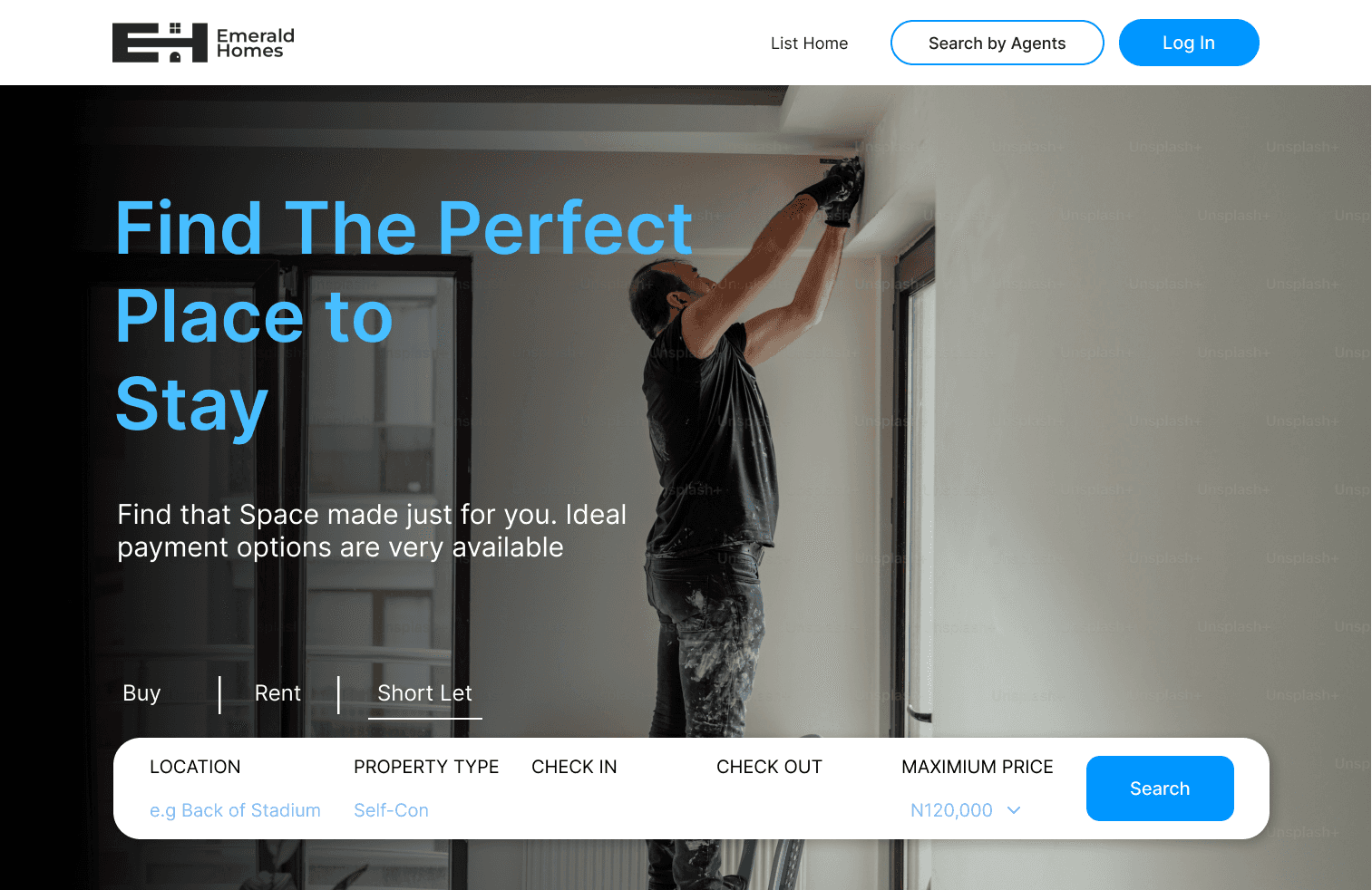
Emerald Homes is a platform designed to connect homeowners looking to sell or rent their properties with real estate agents and potential clients. The website's primary objective is to simplify the home buying, selling, and rental processes by creating an easy-to-navigate, responsive platform that fosters efficient communication between the three main stakeholders: homeowners, real estate agents, and clients. The goal was to develop a responsive and intuitive website that improves user experience, minimizes the time it takes to find and close deals, and enhances transparency throughout the process.
Objectives
Streamline Communication: Facilitate easier, real-time communication between homeowners, agents, and clients.
Simplify Property Discovery: Provide a user-friendly search experience with effective filters and personalized recommendations.
Create Transparent Listings: Give homeowners and agents control over the accuracy and clarity of property information.
Responsive Design: Ensure the platform is fully functional on any device, offering a smooth experience whether on desktop, tablet, or mobile.
Pain Points
Homeowners Struggle to Find Trusted Agents: Homeowners often don’t know where to find reputable agents to list their properties. Many traditional platforms fail to showcase agent profiles, making it difficult to assess their credibility.
Lack of Personalized Property Discovery: Clients frequently struggle to find properties that truly match their needs. Filtering options on many platforms are too broad or not tailored enough to specific user requirements, such as budget, amenities, or neighborhood preferences.
Inefficient Communication: Miscommunication and delays between homeowners, agents, and clients often lead to frustration. The current system often relies on phone calls, emails, or third-party communication tools, creating friction in the process.
Clunky Navigation & Listing Management: For both homeowners and agents, managing listings, tracking leads, and updating property details on many platforms is cumbersome and unintuitive.

John
Entreprenuer, 40
Tech Proficiency: Medium
Needs: A reliable platform to connect with experienced, trustworthy real estate agents. He needs an easy way to list his home, track inquiries, and receive feedback on potential buyers or renters.
Pain Points: John finds it difficult to trust online agents and wants a platform that provides transparency about how his property will be marketed. He also feels frustrated by the lack of control over his listing.
Goals: To sell his home quickly and at a fair price while working with an agent he can trust and having clear visibility into the status of his listing.
Research Methodology
To ensure the design of the platform met the needs of its diverse user groups, we conducted thorough research, including:
Surveys: Conducted with over 400 homeowners, real estate agents, and potential clients to understand their challenges, needs, and expectations from a property-related platform.
User Interviews: We held 15 in-depth interviews with a range of real estate agents, homeowners, and prospective buyers or renters to uncover deeper insights into the frustrations and desires of each user group.
Competitive Analysis: Analyzed several real estate platforms, focusing on the strengths and weaknesses of existing websites to identify opportunities for improvement.
Usability Testing: Early wireframes and prototypes were tested with real users to validate key features and refine the interface for optimal user flow.
Key Findings
Homeowners’ Pain Points:
Difficulty reaching credible agents.
Lack of transparency about how properties are marketed and sold.
Limited ability to track the status of their property listing or manage updates easily.
Real Estate Agents’ Pain Points:
Difficulty finding new listings to match their client’s needs.
Inability to effectively showcase properties in a user-friendly format.
Lack of detailed client feedback on property showings.
Clients’ Pain Points:
Difficulty finding properties that match their needs (budget, location, amenities).
Frustrating navigation due to irrelevant or unclear search filters.
Time-consuming and confusing process to get in touch with agents or homeowners.
Solutions
Responsive, Easy-to-Navigate Platform:
The website was designed to be fully responsive, ensuring a smooth experience across all devices. The layout was kept simple and clean, with clear calls-to-action (CTAs) for each user type—homeowners, agents, and clients.
Mobile-First Design: Given that many users browse property listings on mobile devices, the website’s design prioritized mobile optimization. Property images loaded quickly, and listings were organized for easy scrolling and comparison.
Accessible Dashboard: Homeowners and agents were provided with a personalized dashboard that allowed them to manage their listings, track leads, and respond to inquiries directly from the site.
2. Personalized Property Discovery:
To address the difficulty clients had in finding suitable properties, the search feature was enhanced with advanced filters:
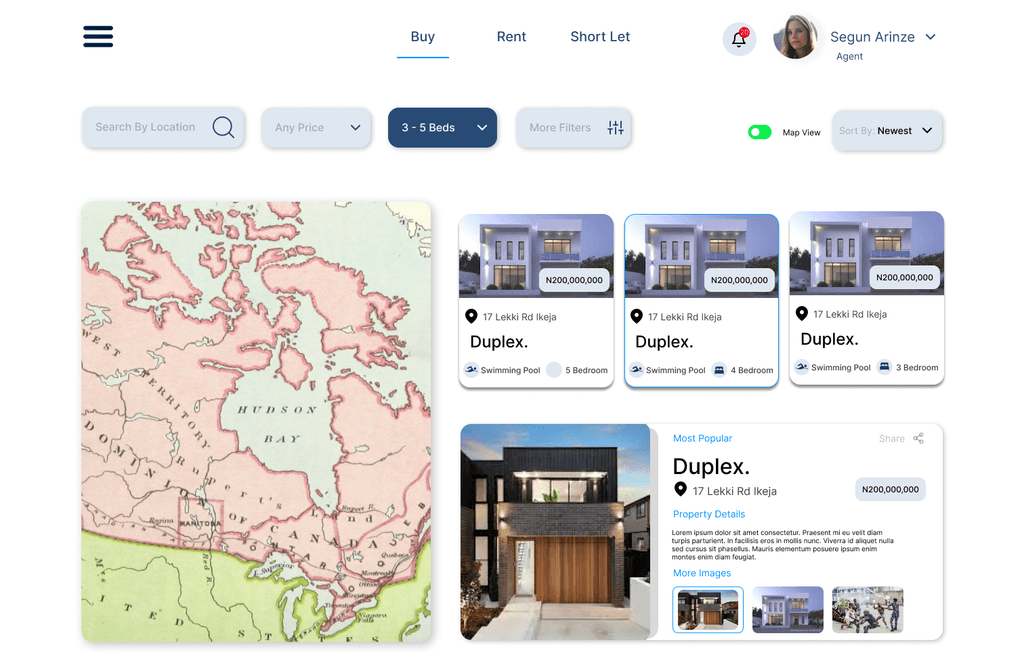
Customizable Search Filters: Clients could refine searches based on multiple criteria, such as location, budget, square footage, amenities, and even proximity to schools or public transport.
Property Recommendations: The platform leveraged user data (such as browsing history) to offer personalized property suggestions based on the user’s behavior and preferences.
3. Improved Communication & Collaboration Tools:
To simplify communication between homeowners, agents, and clients, we introduced:
In-App Messaging: Direct messaging between users allowed for faster communication without leaving the platform. This feature was available for homeowners, agents, and clients to ask questions, share updates, or schedule viewings.
Real-Time Notifications: Users received real-time updates on property interest, price changes, or new listings via email or app notifications.
4. Transparent and Easy Listing Management:
Homeowners and agents were given full control over their listings. Key features included:
Simple Listing Creation: Listing properties was streamlined with a step-by-step process, including the option to upload photos, videos, and property details easily.
Listing Analytics: Homeowners and agents could track how many views their property had received, how many inquiries were made, and which properties were getting the most interest.
Feedback System: Clients could leave feedback on properties they viewed, providing valuable insights to agents and homeowners on how to improve listings.
To ensure the design of the platform met the needs of its diverse user groups, we conducted thorough research, including:
Surveys: Conducted with over 400 homeowners, real estate agents, and potential clients to understand their challenges, needs, and expectations from a property-related platform.
User Interviews: We held 15 in-depth interviews with a range of real estate agents, homeowners, and prospective buyers or renters to uncover deeper insights into the frustrations and desires of each user group.
Competitive Analysis: Analyzed several real estate platforms, focusing on the strengths and weaknesses of existing websites to identify opportunities for improvement.
Usability Testing: Early wireframes and prototypes were tested with real users to validate key features and refine the interface for optimal user flow.

Clara
Senior Real Estate Agent, 40
Tech Proficiency: High
Needs: Access to high-quality property listings that match client needs. The ability to easily manage her listings and communicate directly with clients and homeowners. She also wants detailed feedback on property viewings to adjust her approach.
Pain Points: Clara struggles to find reliable property listings and finds it difficult to organize and keep track of multiple leads across different platforms.
Goals: To streamline her client outreach and listing management, and connect with serious, motivated buyers or renters.

Micheal
Software Developer, 35
Tech Proficiency: High
Needs: A platform that allows for detailed property searches, personalized recommendations, and direct communication with agents or homeowners. Michael wants a straightforward, no-frills process to quickly find and view properties.
Pain Points: Michael finds it difficult to narrow down his property options due to generic search filters and unreliable listing details. He’s also frustrated by delayed responses from agents.
Goals: To find a home that fits his budget, location, and lifestyle needs quickly, with as little back-and-forth communication as possible.
Conclusion
The Emerald Homes website successfully met the needs of homeowners, agents, and clients by creating a seamless, transparent, and responsive platform for property transactions. By simplifying property discovery, enhancing communication, and giving users control over their listings and interactions, the website significantly improved the overall user experience.